From the editorial archive
Articles
Essays on money and economics. Stories from the road. And the question of how we want to live.
The wider picture
24 Essays

Economics & Money
Why Does Bitcoin Have Value?
On scarcity, trust, and the attempt to preserve purchasing power earned today for tomorrow

Economics & Money
What Is Bitcoin, Anyway — and Why Does It Exist?
How something scarce can emerge from data that can be copied — and what that has to do with our money.
Economics & Money
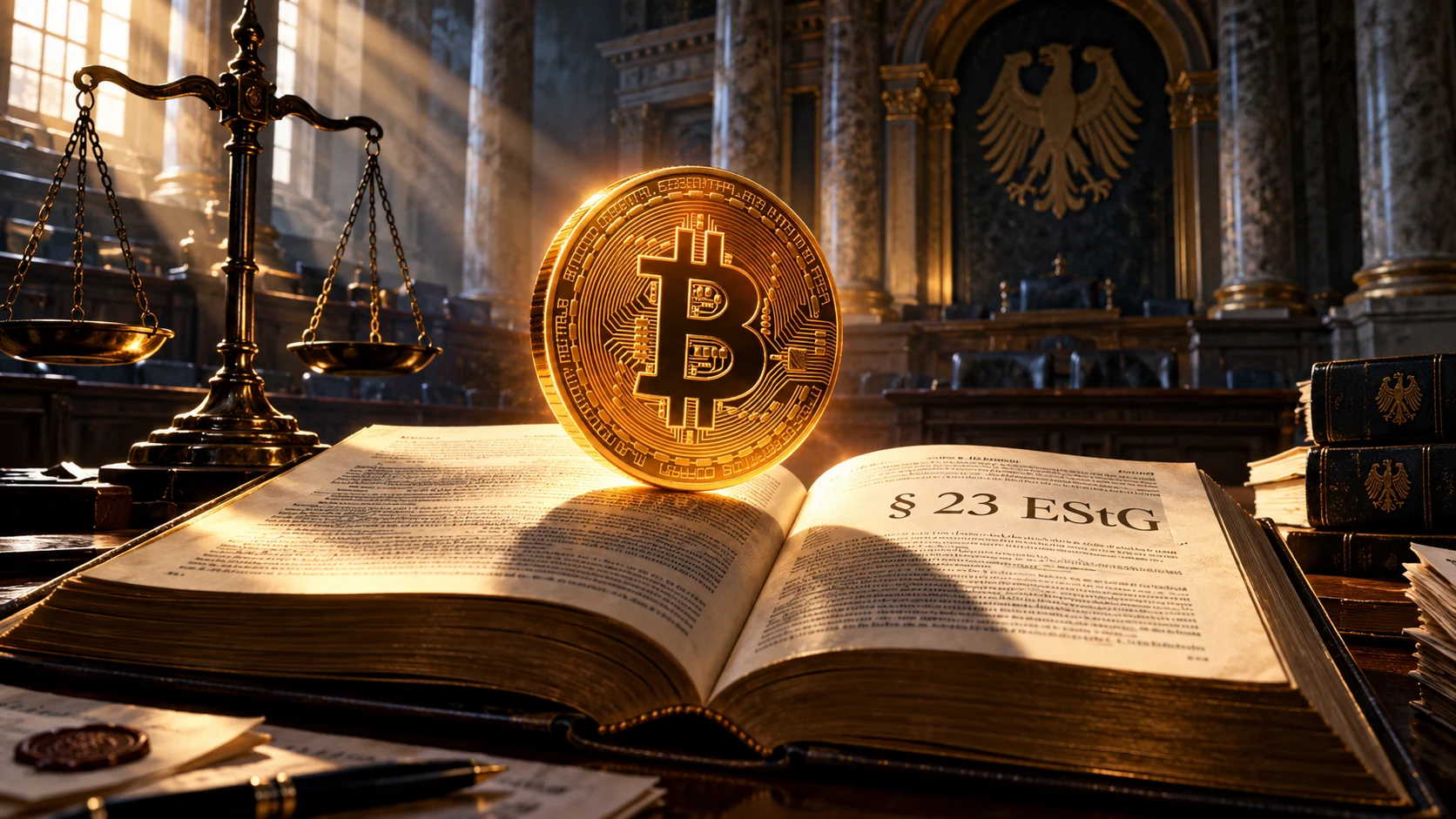
Bitcoin and Taxes: Who Owns the Gain After One Year?
Why Germany's Bitcoin holding-period exemption is under review — and what Section 23 of the Income Tax Act has to do with it
Bitcoin & Artificial Intelligence
When Machines Pay: Why AI Needs Money of Its Own
Software operates worldwide. What kind of money suits an economy in which programs buy services independently?
Public Debt & Purchasing Power
When Debt Remains and Money Loses Value
Trump speaks openly about inflation as relief for debtors. France is debating new crypto taxes, while Germany is taking on additional borrowing. Behind it all lies a question that affects us all: Who pays for the promises of the state?
Money & Power
1971 – When Money Became a Political Decision
With the end of Bretton Woods, the dollar lost its international link to gold. 55 years later, Bitcoin raises a more fundamental question: Who should be allowed to determine the rules of our money?
Money & Life
Why we work for freedom – and keep putting it off
How much do we need to save before we take time to live?
History & Bitcoin
Satoshi and Luther – A Reformation of Trust
A monk challenges the authority of the Church. Almost five centuries later, an unknown figure designs money without a central controlling authority. What connects Martin Luther and Satoshi Nakamoto, and where does the comparison end?
Bitcoin & Ownership
Who Owns Bitcoin? Retail Investors, Whales and Wall Street
Bitcoin can be traced on the blockchain down to the last satoshi. Yet establishing who owns the coins is surprisingly difficult. Since the launch of US spot ETFs, another layer has emerged: millions of investors can have a stake in Bitcoin while a small number of service providers hold the keys.
Economics & Money
What Is Interest?
Time, saving and capital: the Austrian view and Keynes’s opposing position
Interest Rates & Capital Flows
When Cheap Money Is Called Back
The ECB, the yen and renewed unease in capital markets: what happens when capital demands a price again?
Monetary Systems & Society
When Money Changes Society
The crisis of the fiat system does not end at the bank statement. It reaches into businesses, politics, culture and how people experience life.
Currency & Monetary Systems
Bolivia: When the Exchange Rate Lies
Not hyperinflation in the technical sense — yet a severe currency crisis that reveals how long an administered price can conceal economic scarcity.
Economics & Money
How Zero Interest Rates Encourage Zombie Companies
How cheap refinancing changes selection in capitalism — and why a bridge through a crisis can become a permanent condition.
Economics & Technology
When Progress Lowers Prices
The computer market shows why falling prices do not necessarily mean a crisis — and why people still buy today.
Bitcoin & Tax
Why Bitcoin Challenges Tax Administration Differently from Gold
Gold leaves familiar traces. Bitcoin shifts ownership into a world of digital evidence — with concrete consequences for holding periods and documentation.
Bitcoin & Ownership
Why Bitcoin Is Really a Debate About Ownership
Behind the discussion about money lies a more fundamental question: who controls, holds and verifies ownership?
Inflation & Monetary Systems
Why Inflation Is Not a Natural Event
Price shocks never hit a neutral surface. They encounter a monetary system of interest rates, debts, rescue promises and expectations.
Bitcoin & Wealth
Bitcoin as a Response to Asset Price Inflation
Why rising asset prices affect owners and savers differently — and why Bitcoin is seen as a way out.
Bitcoin & Monetary Theory
Why Bitcoin Is More Than Digital Gold to the Austrian School
Bitcoin is not just a scarce digital asset. It is an attempt to shift monetary rules from institutional discretion into a verifiable protocol.
Banking & Monetary Systems
Banking Crises and the Power of Modern Central Banks
Market correction meets fragile credit chains: why central banks become the infrastructure of last-resort trust in an emergency.
Politics & Monetary Systems
Why Hard Currencies Are Politically Inconvenient
Rule-bound money limits political escape routes — especially when crises make swift and less visible action attractive.
Bitcoin & Gold
Bitcoin and Gold: Two Forms of Scarcity
Gold is scarce because of its material properties; Bitcoin because of a verifiable rule. The result is two very different architectures of ownership.
Inflation & Politics
How Inflation Can Create Political Room for Manoeuvre
Inflation is not a pleasant goal, but it can give governments room for manoeuvre whose more visible alternatives would be politically more painful.
On the road
1 Travel story
New here?
Three articles to get started.
Money, ownership and progress: three questions that connect andy/zyklisch.